Beejay Silcox speaks with Michael Brissenden for The Pulse Papers, the accompanying interview series to MARION’s Hidden Nerve program.
Michael Brissenden has sharp instincts about power, and the stories we tell about it. After thirty-five years reporting from war zones, cabinet rooms and the back channels of national security, he’s now established as a bestselling crime novelist. His books trace the human fallout of power: what happens when institutions fail, communities splinter, or the taps run dry. After Michael’s HIDDEN NERVE session, we sat down to talk about what journalism teaches a writer, and what fiction asks them to unlearn: how to trust your story, your reader and yourself.
Let’s start at the very beginning, with the first stories that captured your attention, the books that made you the reader you are...
There were books everywhere in our house. My father was an English lecturer at ANU, and so a lot of writers came and went. But the first stuff I really remember was read to me: the ancient Greek myths. I loved those stories. I grew up on Odysseus and Achilles.
When I started reading myself – and I really didn’t start reading until I was in my teens – it was crime. My father had a huge collection of thrillers and crime novels. He was always carrying one around with him. That’s where I started: the hard-boiled American stuff. Dashiell Hammett and Elmore Leonard. People like that. And then the British post-war writers: Len Deighton and John le Carré.
What did you love about them?
I loved the language in those books. There was nothing pretentious about them. They were clever, but they never felt like they were showing off. They just felt real to me.
So you grow up around writers, your dad is a professor of poetry, you internalise these crime stories, and you head off to art school...
I remember having this conversation with my father when I was about fourteen about what I wanted to do. I wanted to be a journalist, and he more or less talked me out of it. Maybe that’s putting it too strongly. I probably just took what he said too much to heart. He was a little dismissive of journalism. He thought most journalists were frustrated writers – people who wanted to write bigger things than they were allowed to within the confines of the job. So he talked me out of it. And the other side of my personality at that age was that I was very into art. I was quite creative, so I thought, okay, I’ll go to art school.
And then I got there and realised fairly quickly that I wasn’t actually a very good artist.
What made you realise that?
Being in that environment, surrounded by people who were genuinely talented, you realise pretty quickly whether you’ve really got it or not. I could probably have ground it out, but I knew I was never going to be great at it. I just didn’t have that thing. But I loved the discipline of art school. I loved the discipline of critique.
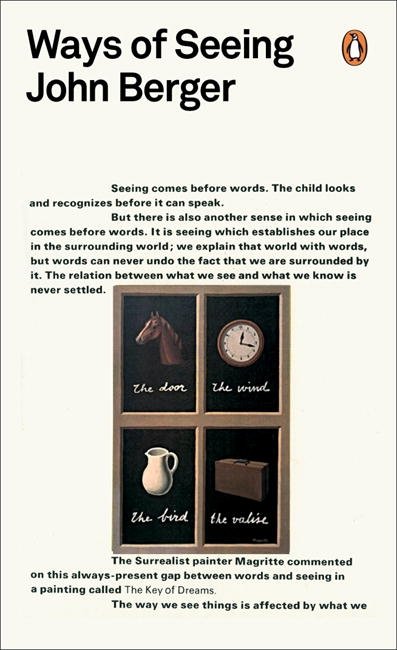
We spent a lot of the time critiquing other work: historical art, contemporary art, all of it. Talking about why things worked and how they worked. John Berger’s Ways of Seeing (1972) was one of those texts that was absolutely crucial to my awakening to that kind of critical thinking.
At the end of each semester, you’d present your own work and open yourself up to criticism from everyone in the class. I learned to take criticism constructively, and how to give it constructively as well. And that turned out to be one of the most valuable things I got from art school. It’s served me through all those years in journalism and now in writing books: the ability to think critically about what you’re doing and why you’re doing it.
Some people are afraid of criticism, or intimidated by the editorial process. But I’ve always embraced it. I’ve always seen it as part of the process.
Well, as a critic, I'm delighted to hear you say all of this. But I also wonder: were you crushed by the realisation that you weren't going to be an artist?
No, it really made other things possible. I wasn’t crushed by it at all. I thought, right, that’s good. At least now I know.
If anything, by the end of that art-school period I was questioning whether I’d wasted my time, because it meant I came quite late to the things I actually wanted to do. But I eventually came to the conclusion that it wasn’t a waste of time at all, because of everything I took from it and carried into journalism.
A lot of people of my generation came into journalism very young through cadet programmes, or from law, economics or politics. I came to it through a very different side door.
So it also seems like art school gave you permission to criticise power, to look at things and say: I disagree, and this is why...
Absolutely. At twenty-five, I don’t think I would ever have had that mindset, if I hadn’t gone through that process.
So talk to me about power, because it seems to me that the thing that really unites your work as a journalist – and the thing you do brilliantly – is that you understand how power works. How do you tell the truth about power?
Well, I think being around power for a long time certainly helps.
I actually tried to write fiction years ago. I wrote my first fully formed manuscript about twenty-five years ago, when I was around forty, and I sent it off to a whole lot of people, and only one person got back to me. She said, ‘Look, it’s not really for me, but I did like this one sentence in chapter four.’ And I remember thinking: well, maybe there’s something there. But not yet.
And I think part of the problem was that I just needed more time. I’d already spent a lot of time as a journalist dealing with power – in politics and in war zones – but I needed more experience for the fiction to work.
It wasn’t really until ten or twelve years ago that all of that experience began to coalesce in a way that made the fiction possible. By then, I’d spent a lot of time in conflict zones, reporting on social fracture, and spending time with the people who live with the consequences of power. I think that was the missing piece. I realised that the people most affected by decisions were also the people who had the biggest impact on me personally. And that was what I wanted to bring into the fiction: to make the political stuff feel alive on the page.
So what was the threshold point where you felt like you had the tools to be able to write fiction?
It really started to work for me after I came back from the US, when I was the Defence and Security Correspondent for the ABC. At that time, the big conversation was Islamist terrorism. I was speaking to people in the intelligence community about how difficult it was for them to break into Islamic communities, and I was also talking to people within those communities about the impact all of this scrutiny and suspicion was having on them.
I could see the way the media and politics of the day were using and abusing the issue, but I couldn’t really reflect that nuance in the journalism I was doing. And I remember thinking: why not try to explore some of this through fiction instead? To look at those issues through the lives of the people affected by them.
And that was the point where it really worked for me. I could feel it happening. Suddenly I could take all those personal experiences and bring out the themes and nuances through character and dialogue. All the things I couldn’t do in straight journalism.
So it was the limits of journalism that sent you to fiction?
Yes, exactly. Though it wasn’t as conscious as thinking: journalism is too limited, so I’ll write novels instead. The two things just happened alongside each other. I was trying to find ways to make the fiction work, while at the same time trying to get those kinds of complexities and nuances into my journalism. So it became this perfect collision between understanding the responsibilities of journalism and also discovering the possibilities of the novel.
My early novels were quite political. The books I’m writing now are less directly political, although politics is still a strong presence within them. They’re just not necessarily about politics in the same way.
So talk to me about that shift...
I think I'm more confident about the fiction process. The more I’ve trusted my own instincts, the better it’s worked. I’ve learned to let things happen rather than trying to control them too much.
I think one of the problems journalists have when they write fiction is that it takes a long time to unlearn journalism. You’re trained to explain everything, to put everything on the page, to make sure the reader knows everything. But fiction doesn’t really work like that. You have to give the reader agency. You have to leave space for them to take hold of the story themselves. That’s taken me a long time to learn – and unlearn – properly. I’m not even sure I’ve fully managed it yet.
But I did make a conscious decision after the first two books, which were so political, that I didn’t want to keep writing in exactly the same way. I realised I’d taken as much as I needed from that experience. I didn’t want to be pigeonholed into writing only those kinds of novels.
Once I was writing fiction full time, I actually wanted to move as far away from that world as I comfortably could. I wanted to use the tools of fiction to dig more deeply into ordinary lives.
What are the tools you have now, that you didn't have as a journo?
Oh, they’re completely different. I love dialogue. I love where dialogue can take you, and how much it can reveal about a person, a situation, a particular moment in time.
And I love that fiction can take you places you never saw coming as a writer. You can suddenly find yourself somewhere you had no idea you were heading. You definitely can’t do that in journalism. In journalism, you have to know exactly where the story is going.
Journalism is somebody’s real story. You have to get it right. It has to be accurate. You can’t misrepresent people. It’s an incredibly constrained discipline. Fiction, to me, is liberation. It’s freedom. I love the red herrings, the twists, the things you don’t see coming. That’s the real joy of it.
Three or four weeks ago I was working on my new book thinking: how the hell am I going to get out of this? And then suddenly something happens and you work it out. That, to me, is the magic of fiction – that process.
There’s a different covenant with the reader in journalism. What’s the covenant with the reader in fiction? What are we really talking about when we talk about truth in a novel?
Well, you still have to be authentic and believable. I’m not writing fantasy. I’m writing, hopefully, entertaining contemporary crime novels that are grounded in the real world.
So a lot of that journalistic observation still matters, because the reader has to trust that what they’re reading is anchored in some kind of truth. The details matter. Procedural things matter. You try to get as much of that right as you can so the reader never falls out of the story. There’s nothing worse than reading a book and suddenly thinking: that would never happen. It happens to me when I read descriptions of newsrooms and think: well, that’s just completely wrong.
And when you’re writing about something like life on the edge in regional Australia, which I was in Dust, you want to get those worlds right. You want people to believe they’re in that moment. So when I go on research trips, those are the details I’m looking for: Sky News playing on televisions, people living in caravan parks, and the reasons they’re there – all those small things that make up lived experience.
That’s the kind of truth I think you need to bring to this sort of fiction. Emotional truth anchored in real-world observation.
To close the loop back to the art school kid: do the things that mattered to you then – critique, workshopping, opening the work up to other people – still feel central to how you make things now?
There’s so much an editor can bring to a manuscript that you simply can’t see yourself as a writer. My attitude has always been: everything’s on the table. There’s nothing you can say that’s going to upset me. The whole point of the process is that we’re all trying to make the book better. And as long as the conversation is constructive and respectful, then nothing should be off limits.
If anything, with the early books, I wanted editors to go harder. They were my first novels and I remember feeling, even then, that the editing probably wasn’t tough enough, although I didn’t really have the language for that at the time. But when I look back now, I think an editor should have come in and said: ‘You’re doing too much exposition here. You’re trying to tell the reader too much all the time’.
And if every book teaches you something, which those early books clearly have, what have you learned from the new one?
I think it’s taught me to trust my instincts even more. There were a lot of hurdles, but I did overcome them. So I’ve learned that I should lean more into that instinctive process rather than trying to control it too much. Doubt is part of the process. In some ways, doubt is the process.