Beejay Silcox speaks with Alice Pung for The Pulse Papers, the accompanying interview series to MARION’s Hidden Nerve program.
Alice Pung has been people-watching since childhood. It’s given her an education in character and in power: how people see themselves and how they see each another. Across her award-winning fiction and memoir, Alice’s writing is alive to human mess. She knows that understanding a person – real or imagined – means resisting the urge to make them simple: to valorise or demonise them. After Alice’s Hidden Nerve session, we sat down to talk about the art of creating characters who are more than a big basket of traits.
Let’s start at the beginning, Alice. When did you first learn to really watch – really see – people?
I guess I learned it from my mother. We came from a country that was pretty hierarchical, and my mother had been working since she was 13 for my grandmother, her future mother-in-law. She didn’t know this would be her future mother-in-law at the time. My grandmother ran a plastic bag factory when all the men were away at war, and my mother was one of the little girls left behind. So she worked in this plastic bag factory.
When she married into the family, my mother didn’t have much of a voice, so she learnt to watch faces. She would know if my dad was getting angry, or if one of the uncles was about to get a little bit too drunk, or if one of the aunties was about to say something really snide. She could just decipher how people felt. She watched people, and I watched her.
You’ve probably had this in your lifetime: if you’re not in a position of power, you know more about those in power than they know about you.
You seem to have developed an early sensitivity to the ways power operates between people – who has it, who doesn’t, and how that shapes the way we all behave...
Oh, I think so. We were kind of squashed into our Melbourne suburb, and it wasn’t a safe place to grow up. It was a very hostile environment. It was a working-class suburb, and a lot of the factories closed down in the 1980s because of globalisation. A lot of the work was sent overseas, to countries like Cambodia, Vietnam and the Philippines.
Our neighbours would see that happening on the news and on television, and at the same time they’d see the government bringing people in from those countries to Australia – families like mine. There was a sense that we were the people who’d stolen their jobs. It wasn’t a friendly neighbourhood. Someone chucked a rock through our window. Just walking to school, you’d sometimes have people hollering things out when you were a teenage girl – just a kid, walking alone. So I guess I learned to watch instead of contribute.
And when did you realise that all this watching, all this noticing, could become something you could pin to the page – something you could use to make things?
I think I was at university, and I was about 20 years old. I was in a creative writing class and I wrote a story about peeing my pants in primary school because I didn’t have the words to say that I needed to go to the toilet. I was too embarrassed because I went to school not speaking English. I spoke Chinese at home.
I think one of the boys in my writing class laughed when he was workshopping my story, and no one else had laughed, so I was a bit anxious and paranoid. But then he put his hand up and said how good it was to have a funny story after all these serious stories over the past eight weeks. He wasn’t trying to be racist, but he said, “I didn’t realise Asian girls could be funny.”
And I was like, yeah, that’s because you’ve only got books like Wild Swans here – that was the only narrative we were allowed.
You broke out of that narrative by writing people you knew and recognised. What do you think is the big rookie mistake emerging writers make when it comes to character?
Oh, they use too many adjectives! Too many! I know this is a cliché – people are always telling you to show, not tell – but they talk about characters as an assemblage of traits instead of desires.
So many new writers think they need to make entire lists of what their characters like and dislike, what they look like, what colour their hair is, blah, blah, blah. What’s more exciting are the questions of why this person is in the world and why we’re with them. What do they want most? What do they love? Who do they love, and what are they most afraid of? These are the questions that are going to compel the action – where the plot comes from.
At what point do you realise there’s a whole story there – that a person is itching to be written?
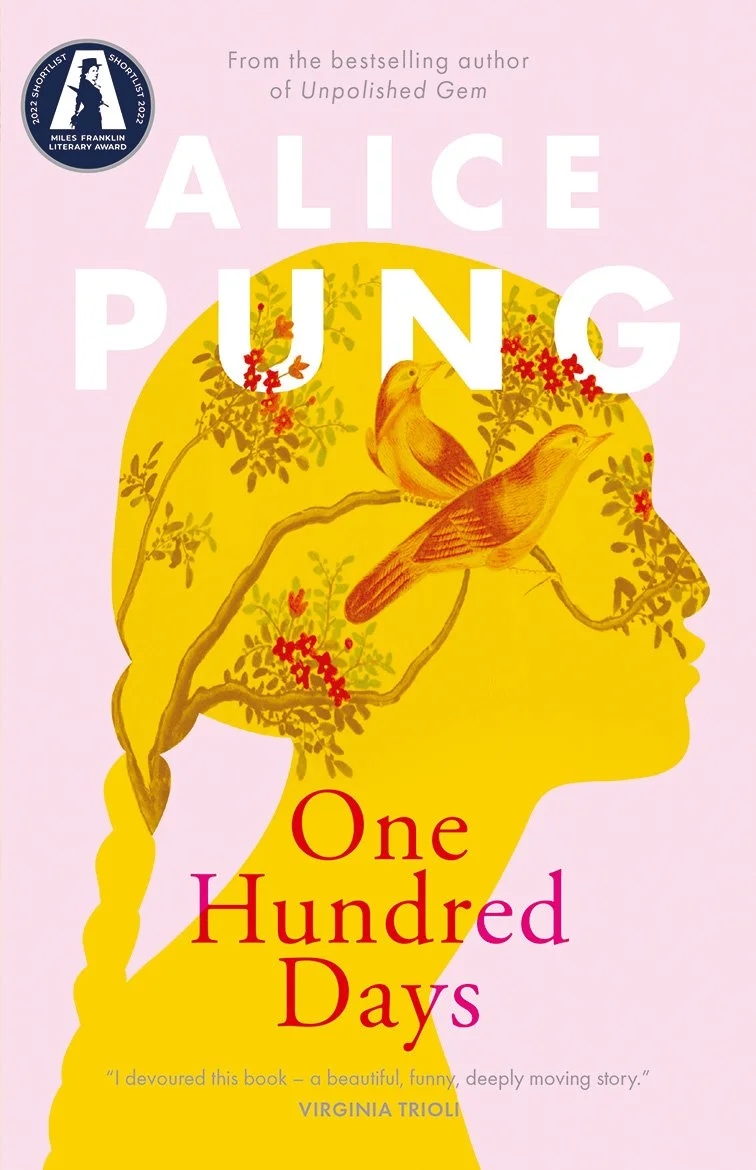
I do better if I give concrete examples, so I’ll talk about my last novel (One Hundred Days). I had three children in about five and a half years, so I was pregnant for a long time – for half a decade. My mother has very strong superstitions about what you must and mustn’t do after you give birth. Some of it is actually really good. You’re not meant to receive visitors in your first month postpartum, and that gives you such a break – you don’t have to deal with all those annoying people who want to hold the baby. But some of it was just ridiculous, like not having a shower for a month, even though it was 32 degrees in summer.
I was feeling sweaty and oppressed and very stuck at home. I thought: wow, I’m 34 years old and around my mum I feel 16 again. And then I had this idea: what if I was 16? And what if I didn’t have the power I have now? And that question was the beginning, a person living that question.
How does that question turn into a fully-fledged person? Can you give me an example of a scene or moment in a book when you think, yes, that’s real – that person sounds alive?
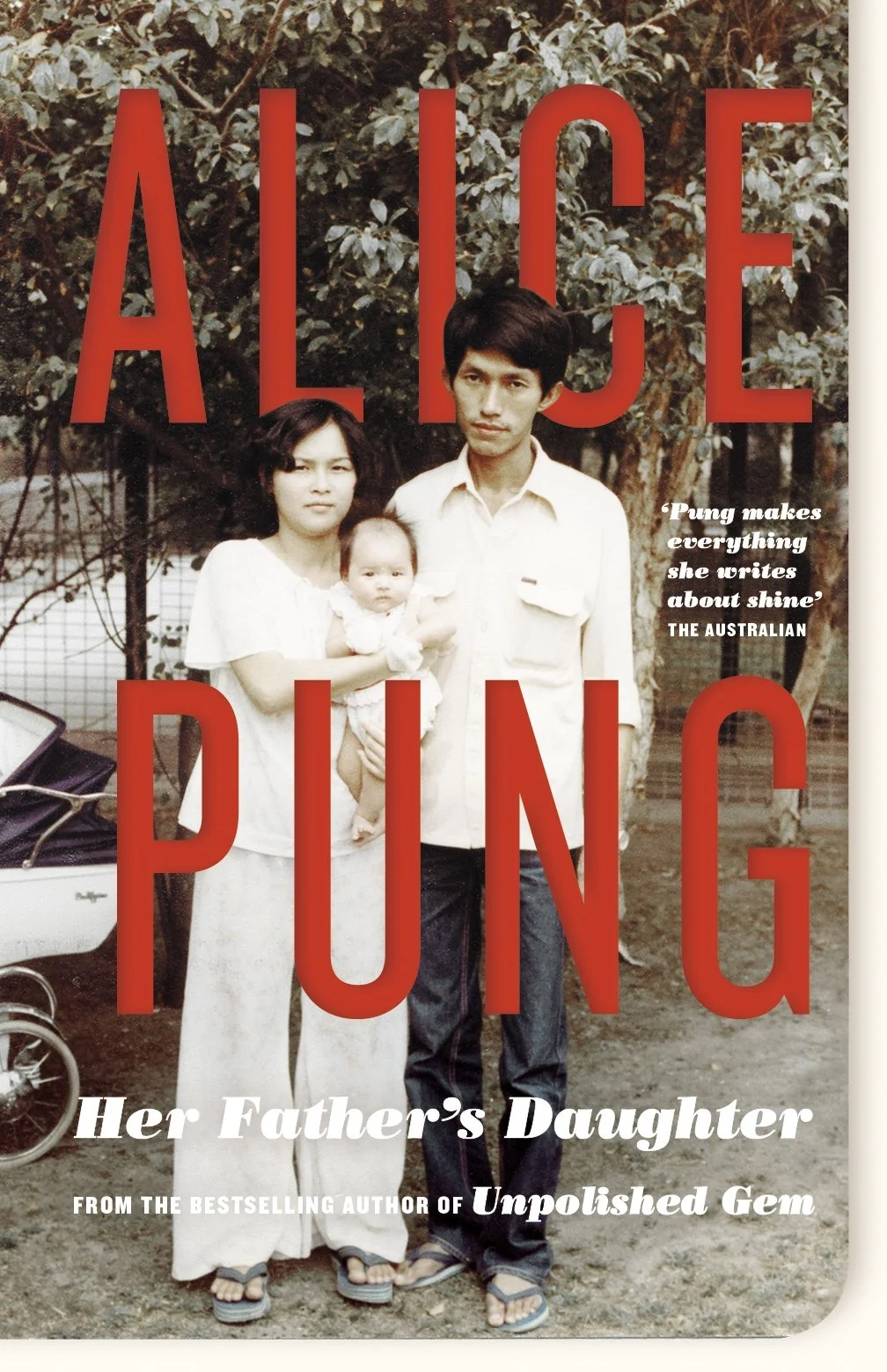
The book I spent the longest with was called Her Father’s Daughter. It took me 10 years to write, mainly because it’s about the Cambodian genocide, but also my father. I started it years and years ago and I was 29, nearly 30, when it was published.
It took so long because I was trying too hard to sound like a father who gives advice to his daughter – a 29-year-old trying to sound like a 60-year-old. It wasn’t working at all. I did sit my dad down and interview him, but he became really boring. He got focused on place names and dates and getting things right, and he lost his voice – the voice that I knew. So I started thinking, what were the moments when my father had been most interesting to me?
I thought about the best stories he’d told me. They were the ones he told when he wasn’t even trying, and when I wasn’t expecting them. When I was younger I was so embarrassed by my dad. A friend of mine came over to our house for dinner and my dad said, “Oh, Bianca, this fish is delicious, but it’s not as tasty as the belt I ate.”
And I’m like, oh, Dad can’t even speak English properly. Because that’s what internalised racism does to you: it makes you look at your parents as people who don’t speak English, not realising that my father – for him, English was his fifth language. He could speak, read and write perfectly well in French, because Cambodia was colonised by the French, to the point where he could compose poetry and songs. But in English, he just spoke with an accent. So instead of understanding that, because I was just a kid, I said to my dad, “Dad, you’re such an idiot. No one eats a belt.”
But it turns out he actually ate his leather belt when they were starving. And he was telling my friend Bianca about it. He said, “Do you know what a cannibal is, Bianca?” And she was like, “Yes, someone who eats another person.”
And she looked at him as if he’d eaten someone, and I was horrified, and then he said: “When you’re starving, your body eats itself. Your body burns off your fat, and then your body starts to eat your muscles.”
So he had this really simple way of explaining it. And then he said, “You know, I had only one thing left, and I didn’t need it because I was so skinny.”
My mum nudged him and said in Chinese, “Tell Bianca you were so skinny that when you breathed in, we could feel your backbone through your stomach.”
So he told her that. And then he said, “I cut this belt into tiny pieces and I thought, hey, this is the skin of an animal. It’s part of a cow. People eat beef jerky and pork crackling.”
So he boiled it for hours on end, and then he gave some to my granny and some to my auntie and said, “Eat this.” So he fed them his belt. And my granny said, “Darling, what animal is this?” And he said, “Just don’t ask any questions. Just eat it.”
He said his sister was chewing on it for two minutes and then asked, “How long has this animal been dead for?” And my dad said, “Oh, don’t ask questions.”
And he said, “Bianca, that belt expanded in our stomachs and made us feel full. And if you feel full, you can work another day, and so you can survive.”
So he told her this story, and I walked her home and she was pretty quiet. I thought, oh, she’s going to dump me. My parents had given her funny food – because it was also the first time she’d eaten fried calamari – and my dad had told her his war stories. So I thought I’d be dumped. But she turned around at the stoop of her door and said, “You know, your dad is really grouse.”
She said, “Do you know what your problem is?” And I thought, she’s really is going to dump me now. But she said, “You are so rude to your dad.” First I was relieved she wasn’t dumping me, but secondly, I said, “What do you mean?”
And she said, “Your dad is a legend. I’ve never heard a story like that before.”
And I said, “Bianca, you can’t tell a word of this story to anyone, because if you do, I won’t be your friend.” I threatened her because I thought, how is that going to go down? This man who speaks English with a funny accent, talking about eating a belt, when the kids at school teased us about eating cats and dogs. I was always so embarrassed by my dad that I blocked out his speaking voice and his storytelling voice.
And then, all those years later, I realised: there was this harrowing story of surviving the Killing Fields that I hadn’t really heard. So I abandoned my draft, which was about 30,000 words, and I thought, no, I’m just going to tell that story straight, the way he told it to Bianca.
And that’s how I found the voice for Her Father’s Daughter, and that’s why the book took me 10 years. It took me 10 years to appreciate that my dad had his own voice, and that it wasn’t something to be embarrassed about.
If you head into a book with questions, what, if anything, is answered at the end of spending time with a character?
Nothing is ever really 100 per cent resolved, because that would just be a fairy tale. But what feels like a kind of resolution for me is hearing from readers. For instance, I had this woman at the Darwin Writers Festival stand up in front of everyone and say, “How did you know about my Irish mum? How did you do that?”
And I’ve never, ever, ever written about a mum in Northern Ireland. I know nothing about that culture. But she recognised her own mother in the Chinese-Filipino mum I wrote in One Hundred Days. She felt it was her mother. I think if you write something so specific that it can only be your mother, it can become other people’s mothers.