
Later Unearthed
Puncher & Wattmann, 2025
The title poem of Later Unearthed discourses upon the inexorably preposterous House of Saxe-Coburg und Gotha, in the person of King George V. The tale of James Macpherson, who was catapulted into the belly of a whale, is just as odd, though sadder. Paul Magee has a sharp eye and musical ear, with a tone that is always fellow human. The middle sequence in the book, Dreaming in Bourke, is an account of time in the Barkindji town of Bourke, outback New South Wales, where cotton sucks the river dry, dragonflies mirror sunrise and floods lie in wait till they flood. There are translations from Silver and Medieval Latin, and a selection of modernist Russians, lamenting catastrophe or foreboding revolution.
Writing is a world
where oceans are tiny.
Suddenness and the Composition of Poetic Thought
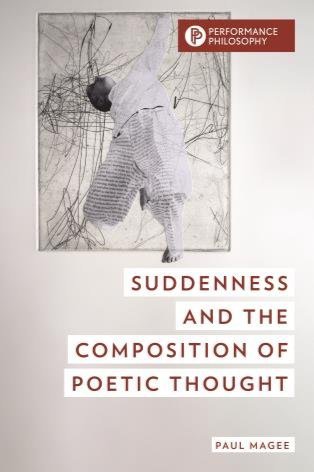
Rowman & Littlefield Publishers, 2022
Interrogating the much-cherished concept of “poetic thinking,” this book focuses on what interview and draft materials reveal of how poets actually do think, when in the act of writing. The interviews confirm what findings from cognitive science and linguistics make clear: we rarely know exactly what words we are going to say, until we have said them. Suddenness and the Composition of Poetic Thought draws out the implications of a radically curtailed view of consciousness on how we understand the drafting and revision of lines of poetry, with implications for our theorisation of the composition of prose. Henrich von Kleist’s assertion that “it is not we, but a certain condition of ours which knows” emerges as central to this reassessment of the nature of the written word.
Employing an extensive archive of interview materials with major Anglophone poets, discussing how they think in the moments of composition, this book also provides a lucid account of the links between poetic composition and live performative thinking in the contexts of Romantic compositional practice and the early (pre)textual history of ancient Greek epic.
A transdisciplinary study at the crossroads of philosophy, cognitive psychology, literary studies, and linguistics, this book reconceptualizes the wellsprings of poetic thought and advances our understanding of thinking’s complex but vital link to improvised speech.
About the Author
Paul Magee studied in Melbourne, Moscow, San Salvador and Sydney. His latest book of verse, Later Unearthed (Puncher and Wattmann, 2025), includes a number of translations from Russian, and also from Latin. Stone Postcard (John Leonard Press, 2014) was named in Australian Book Review as one of the books of the year for 2014. Cube Root of Book (John Leonard Press, 2006), was shortlisted in the Innovation category of the 2008 Adelaide Festival Awards for Literature. Other works include Suddenness and the Composition of Poetic Thought (Rowman and Littlefield, 2022), which is based on Australian Research Council funded investigations into the nature of poetic composition. Paul is Professor of Poetry and Director of the Centre for Creative and Cultural Research at the University of Canberra.