
Patrick Mullins
The Stained Man
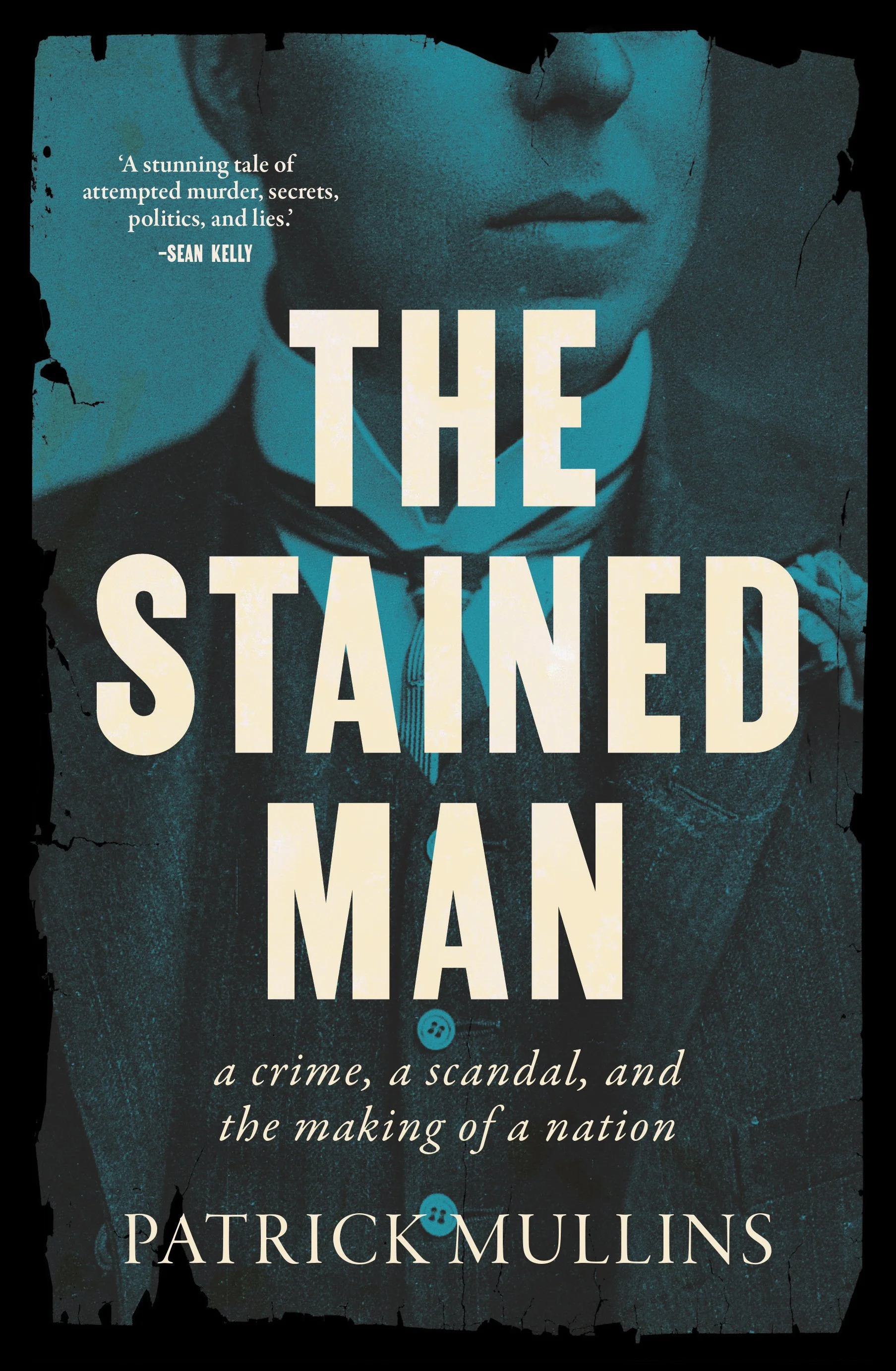
Scribe, 2026
The extraordinary tale — ‘A two-volume mystery!’ Mark Twain called it — of the solicitor who incited a campaign to free a man he knew was guilty of attempted murder, who lost his reputation and ability to practise, and who embarked on a decades-long political career to regain it all.
Sydney, 1895. Richard Meagher is a brilliant criminal defence solicitor with ambitions in politics. Into his life comes George Dean, a handsome, popular ferryman accused of attempting to poison his own wife. The evidence pointing to Dean’s guilt is damning but, in Dean’s protests of innocence and the clamour of public support, Meagher senses that a great opportunity is at hand.
Nine months later, everything is in ruins. Dean is in gaol, and Meagher has lost everything. Determined to recover his reputation and vindicate his actions, Meagher begins a twenty-five-year quest to rewrite the ‘Dean case’ and reclaim all he has lost. That quest will put him in the glare of public scrutiny, arouse enemies at every turn, propel him to high political office, and entwine his cause with the making of the Australian nation.
In a work of true crime with a twist, moving from sordid Sydney streets to the corridors of parliament, and spanning the critical years of Australia’s history in the late-19th and early-20th centuries, The Stained Man tells the riveting story of Australia’s most sensational scandal — and of how an indelible stain was eventually expunged.
Tiberius with a Telephone:
the life and stories of William McMahon

Scribe Publications, 2020
The oddly compelling story of a man regarded as Australia’s worst prime minister.
William McMahon was a significant, if widely derided and disliked, figure in Australian politics in the second half of the twentieth century. This biography tells the story of his life, his career, and his doomed attempts to recast views of his much-maligned time as Australia’s prime minister.
After a long ministerial career under Menzies, McMahon became treasurer under Harold Holt, and fought a fierce, bitter war over protectionism with John McEwen. Following Holt’s death in 1967, McEwen had his revenge by vetoing McMahon’s candidature for the Liberal Party’s leadership, and thus paved the way for John Gorton to become prime minister. But almost three years later, amid acrimony and division, McMahon would topple Gorton and fulfill his life’s ambition to become Australia’s prime minister.
In office, McMahon worked furiously to enact an agenda that grappled with the profound changes reshaping Australia. He withdrew combat forces from Vietnam, legislated for Commonwealth government involvement in childcare, established the National Urban and Regional Development Authority and the first Department of the Environment, began phasing out the means test on pensions, sought to control foreign investments, and accelerated the timetable for the independence of Papua New Guinea. But his failures would overshadow his successes, and by the time of the 1972 election McMahon would lead a divided, tired, and rancorous party to defeat.
A man whose life was coloured by tragedy, comedy, persistence, courage, farce, and failure, McMahon’s story has never been told at length. Tiberius with a Telephone fills that gap, using deep archival research and extensive interviews with McMahon’s contemporaries and colleagues. It is a tour de force — an authoritative and colourful account of a unique politician and a vital period in Australia’s history.
2020 NSW Premier’s Non-Fiction Award
2020 Winner - National Biography Award
“This is, as others have remarked, biography at its best: diligently researched, with detail nowhere else examined, and a demonstration of fine judgement concerning the crucial interplay between personal disposition, role demands, and historical context.”
About the Author
Patrick Mullins is a Canberra-based writer and academic who has a PhD from the University of Canberra. Tiberius with a Telephone, his first book, won the 2020 NSW Premier’s Non-Fiction Award and the 2020 National Biography Award. He is also the author of The Trials of Portnoy: how Penguin brought down Australia’s censorship system.